
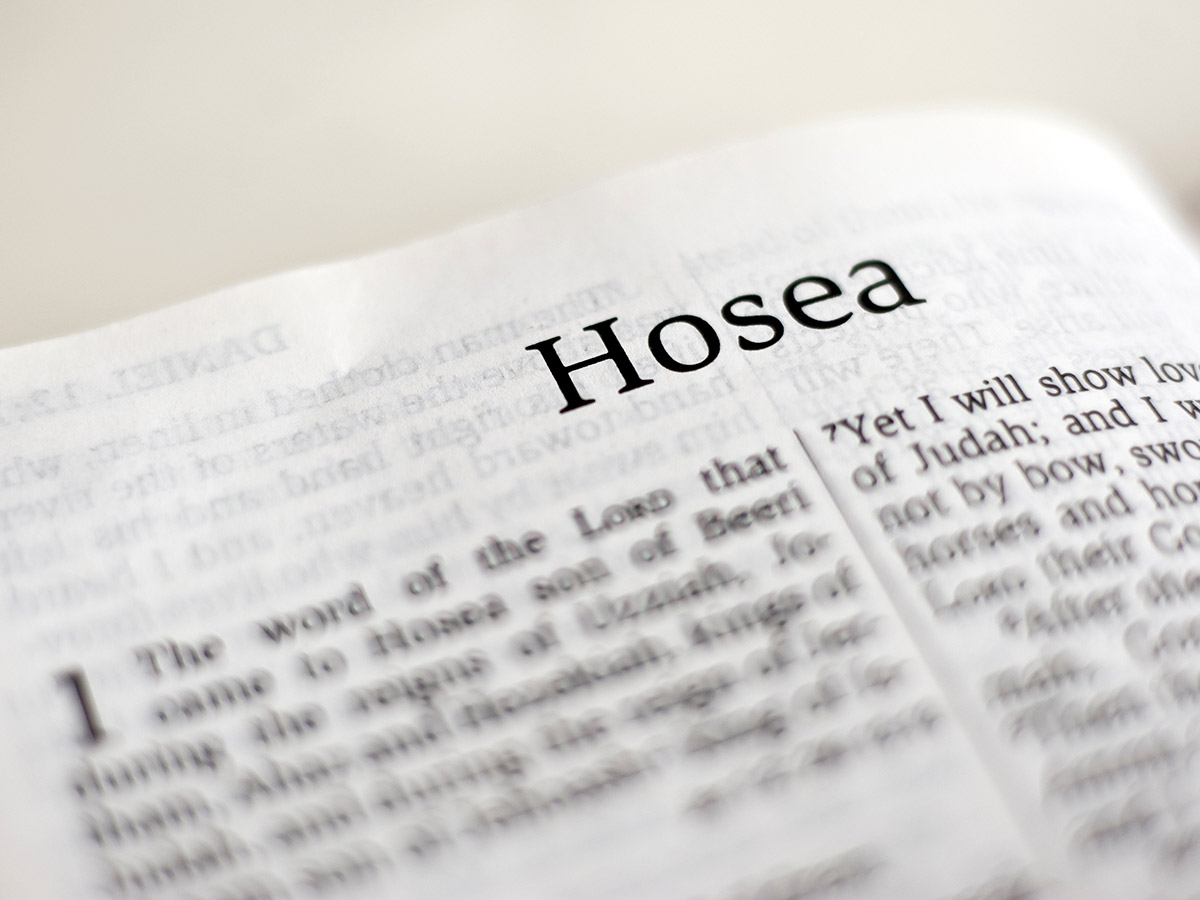
Though the entire life of a Christian is one of repentance (the first of Luther’s Ninety-five Theses), Lent brings heightened focus upon repentance. That focus is given clarity by the twelfth article of the Augsburg Confession which rightly confesses that repentance consists of both contrition and faith. The penitent have genuine remorse for their sin but trust in Christ who has atoned for their sin. The sixteenth century AD reformers got it right. Yet we are well-served to go back further in time in our penitential reflection, even back to the eighth century BC when Yahweh spoke to His people and to us through His prophet Hosea. Specifically, meditate upon Hosea 11:10-11 which I translate as follows.
They will go after Yahweh,
who will roar like a lion.
Indeed, He will roar,
and sons will come trembling from the sea.
They will come trembling like a bird from Egypt
and like a dove from the land of Assyria
so that I will cause them to dwell in their houses.
The utterance of Yahweh.
While the typical Hebrew terms for repentance (שׁוּב and נחם) are not used in these verses, it remains a potent penitential text. Its potency is seen by a quick glance at its literary context, its unique simile, and its resolution, all of which focus our Lenten penitential reflection.
First, reflect upon the literary context. Hosea 11 contains Yahweh’s delightful proclamation that He is father to Israel. “When Israel was a lad, I loved him.” (Hosea 11:1) “I taught Ephraim to walk, taking them upon My arms.” (Hosea 11:3) “I kept pulling them with cords of love.” (Hosea 11:4) Though Yahweh delighted to Father to Israel, the delight was not reciprocated. Israel “kept sacrificing to the baals” (Hosea 11:2) because they were “bent upon apostasy from Me” (Hosea 11:7). The need for repentance is evident. Yahweh initiates Israel’s repentance because His “compassion altogether grows hot.” (Hosea 11:8) Thus, He chooses “not to execute His burning anger,” (Hosea 11:9) but calls His people home as He roars like a lion (Hosea 11:10).
This lion simile is unique among the prophets. This is hardly the only time that Yahweh is described as a lion among the prophets. It isn’t even the only time for such a simile/metaphor in Hosea (cf. 5:14; 13:7-8). What makes this usage of lion imagery unique is that it bears a Gospel promise. When the prophets describe Yahweh as a lion, they capture His wrath against sin and His resulting condemnation. Hosea 11:10-11 is unique in that Yahweh’s roar calls His children home. They come home trembling, but they come home nonetheless.
Therein lies the resolution of the text. Yahweh’s wandering, rebellious son, Israel, comes home. They come from the sea, Egypt, and Assyria, from anywhere and everywhere. His word does it. He sounds forth like a lion with a call to which they respond. “The utterance of Yahweh” is effective. Yet note that they come home trembling, a point stated twice by Yahweh through Hosea. They had been exiled, far from home, because of their sin. So, when they finally come home, they do so with trembling. So, how does this help our Lenten penitential reflection? First, rejoice that Yahweh so delights in His son, including you who have been adopted by Him in Holy Baptism, that He initiates your repentance. Second, delight in His roaring voice that cannot be missed. Third, the dark hollows to which our sin confines us are difficult to leave. We leave them trembling. But those dark hollows are not home. Your home is with Yahweh, who delights to be your Father, who roars for you and causes you to dwell in the home He provides.

Leave a Reply
You must be logged in to post a comment.